This is a mirror of official site: http://jasper-net.blogspot.com/

Axum

| Wednesday, April 28, 2010
Axum is a language that builds upon the architecture of the Web and principles of isolation, actors, and message-passing to increase application safety, responsiveness, scalability, and developer productivity.

Other advanced concepts we are exploring are data flow networks, asynchronous methods, and type annotations for taming side-effects.

Is Axum a Product?
As an incubation project, Microsoft has made no commitment to ship Axum as a supported product. The form (i.e. syntax, runtime, features, and ecosystem) is subject to change to any degree and at any time.

Should I Use Axum?
Yes! We are incubating Axum to solicit feedback from our customers and validate Axum's value propositions. Your feedback is the biggest factor in the success of Axum, whether it will become a product and, most important, whether it can help make parallel programming safer, more scalable, and more productive. Use Axum if you want to prototype a parallel application, contribute to an exciting new technology, or just have general interest in programming languages. Axum is a nascent and experimental technology and, as such, should not be used in production code.

Read more: Microsoft DevLabs

Posted via email from jasper22's posterous

What is Interactive Services Detection and Why is it Blinking at Me?

|
image1_thumb.png

Why is this Happening?

Services and system processes run in session 0. Prior to Vista, the console (first logged on user’s desktop) ran in session 0 as well. Vista introduced session 0 isolation to protect services from elevation of privilege exploits from the console desktop. Now, the first user’s desktop runs in session 1.

Interactive Services Detection (the blinking button on the taskbar) is a mitigation for legacy applications that detects if a service is trying to interact with the desktop. This is handled by the Interactive Services Detection (UI0Detect) service.

When you choose “View the message”, you are taken to session 0’s desktop and you can only interact with the dialog or message that services have tried to display on the desktop.
Behavior Depends on Your Bits

The Interactive Services Detection service is set to start “manually”. This means that it won’t start automatically when the system boots.

Read more: Pat's Application Compatibility Blog

Posted via email from jasper22's posterous

Mono's C# Compiler as a Service on Windows.

|
The Mono team is proud to bring you a preview of C# 5.0 a few years before our friends in Building 41 do.

A snapshot of the code is available in the demo-repl.zip file. This contains the csharp.exe C# REPL shell and the Mono.CSharp.dll compiler-as-a-service assembly.

With Today's code drop all those scenarios now work:

   * Run Mono's C# compiler on .NET
   * Embed Mono's Evaluator in your C# app.
   * Use Mono's REPL with the .NET framework runtime.

Background

Although we have had a compiler-as-a-service framework since September of 2008 it has been so far limited to Mono users, which effectively means only Linux and OSX users could use our C# REPL and the compiler as a service.

The reason is that the Mono's C# compiler uses System.Reflection.Emit as its code generation backend. This API was fine for implementing C# 1.0 but required a few changes to support compiling its own core library (mscorlib, the equivalent of libc in C or rt in Java).

When we started to work on our C# 2.0 support, we were working on our compiler as the language was being standardized at ECMA. Our compiler evolved faster than the underlying support for Reflection and Reflection.Emit did and this lead to more Mono-specific extensions being added to our Reflection and Reflection.Emit code. The more extensions that we depended on, the fewer chances we had of running with Microsoft's runtime.

Read more: Miguel de Icaza's web log

Posted via email from jasper22's posterous

Java Decompiler

|
The “Java Decompiler project” aims to develop tools in order to decompile and analyze Java 5 “byte code” and the later versions.

JD-Core is a library that reconstructs Java source code from one or more “.class” files. JD-Core may be used to recover lost source code and explore the source of Java runtime libraries. New features of Java 5, such as annotations, generics or type “enum”, are supported. JD-GUI and JD-Eclipse include JD-Core library.

JD-GUI is a standalone graphical utility that displays Java source codes of “.class” files. You can browse the reconstructed source code with the JD-GUI for instant access to methods and fields.

JD-Eclipse is a plug-in for the Eclipse platform. It allows you to display all the Java sources during your debugging process, even if you do not have them all.

JD-Core, JD-GUI and JD-Eclipse are free for non-commercial use. This means that JD-Core, JD-GUI and JD-Eclipse shall not be included or embedded into commercial software products. Nevertheless, these projects may be freely used for personal needs in a commercial or non-commercial environments.

Read more: Java Decompiler

Posted via email from jasper22's posterous

OSSEC

|
OSSEC is an Open Source Host-based Intrusion Detection System. It performs log analysis, file integrity checking, policy monitoring, rootkit detection, real-time alerting and active response. It runs on most operating systems, including Linux, MacOS, Solaris, HP-UX, AIX and Windows.

Read more: OSSEC

Posted via email from jasper22's posterous

How Google will kill Internet Explorer and save the web

| Tuesday, April 27, 2010
I’d like to make a prediction. I’m probably not the first to make it, and I may be utterly wrong, but just in case I prove to be right, I’d like to have it on record.1

I believe Google is planning to kill off Internet Explorer, within the next two years, and I think they can succeed. By “kill off” I mean turn it from the majority browser into a niche browser (<20% for all versions combined.) I believe the strategy relies on Chrome Frame, YouTube, and HTML5 video using the VP8 format.

Step 1. It is rumoured Google will soon open-source the VP8 video compression format by On2 Technologies, whom they bought earlier this year. They’ll do so in the hope that it would become the default video format on the web, over Theora (open but technically inferior) and H.264 (superior but patent-encumbered). If they did so, Mozilla, Webkit and Opera browsers, with their fierce competition and fast update cycles, will likely hedge their bets and quickly add support for VP8, in addition to the formats they already support.

Step 2. Google will transcode all videos on YouTube to VP8 format, and serve this as the default to capable browsers. Converting such a vast amount of video is a monumental task, but Google has the resources to do it.

Step 3. Once the release versions of all the major non-IE browsers are capable of displaying VP8 HTML5 video without a hitch2, Google will make its final move. Notices will appear on YouTube that they will soon turn off support for Flash, and serve all video as VP8 only. If you use Firefox, Safari or Chrome, you won’t notice a difference. But if you’re using Internet Explorer, not to worry: all you need to do is install a simple plugin: Chrome Frame.

Chrome Frame effectively turns Internet Explorer into Chrome. It still looks like you’re running IE, but the rendering engine has been replaced by Google’s. (Only on request, though: web authors have to explicitly ask for Chrome Frame to be used if available. The rest of the time IE remains unchanged.)

Read more: isotoma

Posted via email from jasper22's posterous

Mail Viewer

|
MailView.png

Viewer for standalone files containing Microsoft Outlook Express 4,5 and 6 message database (*.idx/*.mbx/*.dbx), Windows Vista Mail/Windows Live Mail and Mozilla Thunderbird message databases as well as standalone EML files. This application is based on MiTeC Outlook Express Reader. It displays list of contained messages with all needed properties as ordinary e-mail client. Message can be viewed in detailed view including attachments (save ability) and HTML preview. It has powerful searching and filtering capability and also allows to extract all email address from all emails in opened folder to list by one click. Selected messages can be saved to *.eml files with or without their attachments. Attachments can be extracted from selected messages by one command.

Read more: MiTec

Posted via email from jasper22's posterous

Recover Data Like a Forensics Expert Using an Ubuntu Live CD

|
sshot815.png

There are lots of utilities to recover deleted files, but what if you can’t boot up your computer, or the whole drive has been formatted? We’ll show you some tools that will dig deep and recover the most elusive deleted files, or even whole hard drive partitions.

We’ve shown you simple ways to recover accidentally deleted files, even a simple method that can be done from an Ubuntu Live CD, but for hard disks that have been heavily corrupted, those methods aren’t going to cut it. In this article, we’ll examine four tools that can recover data from the most messed up hard drives, regardless of whether they were formatted for a Windows, Linux, or Mac computer, or even if the partition table is wiped out entirely.

Note: These tools cannot recover data that has been overwritten on a hard disk. Whether a deleted file has been overwritten depends on many factors – the quicker you realize that you want to recover a file, the more likely you will be able to do so.

Our setup

To show these tools, we’ve set up a small 1 GB hard drive, with half of the space partitioned as ext2, a file system used in Linux, and half the space partitioned as FAT32, a file system used in older Windows systems. We stored ten random pictures on each hard drive.

Read more: How-to-geek

Posted via email from jasper22's posterous

VMKit: JVM and .Net runtimes for LLVM

|
The VMKit project is an implementation of a JVM and CLI virtual machine (.Net is an implementation of the CLI). It translates Java bytecode and MSIL in the LLVM IR and uses the LLVM framework  for optimizations and compilation. For garbage collection, it uses MMTk. You can get and build  the source today.
Features

VMKit provides the following features:

End-User Features:

   * Runs any Java and .Net applications on MacOSX and Unix-based systems.
   * Precise garbage collection.
   * Just-in-Time and Ahead-of-Time compilation.
   * Portable on many architectures (x86, x64, ppc32, ppc64, arm).

Developer Features:

   * Relatively small code base (~ 20k loc per VM)
   * Infrastructure for running multiple VM/applications in a single process
   * Infrastructure for virtual machine research and development

Why?

The development of VMKit was started out of a need to factorize virtual machine development. The JVM and CLI virtual machine have many similarities, but are too high-level to be the basis of a "universal" virtual machine. The LLVM IR on the opposite is low-level enough to be able to execute these VMs. VMKit is a proof of concept implementation towards that direction.


Read more:  LLVM Home

Posted via email from jasper22's posterous

Using Windows Explorer & SkyDrive without ANY 3rd party software (not even Office 2010!)

|
Standard Disclaimer: First of all this works for me (i.e. works on my system, etc). This is not official, supported, documented, etc. If it doesn’t work for you, then there’s not much I can do. You assume all risk when you attempt this. YMMV. Do not remove tag… yada… yada… yada…

I’ve only gotten this to work on Windows 7. Also you must have Live ID, a SkyDrive folder, etc, etc…

Today a thread has been going around about how to map a drive letter to a SkyDrive folder without any 3rd party software, EXCEPT Microsoft Office 2010. (SuperSite Blog - Use Office 2010 to Map a Drive Letter to SkyDrive –> DownloadSquad - Use Office 2010 to map a local drive letter to your free 25GB Live SkyDrive)

Well I believe I’ve found a way where you don’t even need Office. [Note statements above…]

What does Office do in this story? It just seems to expose a SkyDrive folder URL in an easy to copy manner. With a bit of work, you can get that same URL without Office.

1. Go to your SkyDrive folder. www.skydrive.com. This will redirect you to your real/full SkyDrive URL

Read more: Greg's Cool [Insert Clever Name] of the Day

Posted via email from jasper22's posterous

Splitting Your Database Files by Using SQL Server Management Studio

|
SQL Server ships with a fantastic graphical user interface: you might say the iPhone of database administration. It is called SQL Server Management Studio. SQL Server Management Studio gives the part-time SQL Server database administrator who is running Windchill a big advantage: an easy-to-use tool that can connect to any SQL Server database (SQL Azure, SQL Server Express, or SQL Server). You can use SQL Server Management Studio to configure the database, change the schema, and read and modify data. Learning the basics of this tool can save you a lot of time, i.e., improve your personal performance.

This post will show you how to split your database files for better performance by using SQL Server Management Studio. In my April 20 post, I discussed the need for dividing the data in your database across multiple RAID 1 arrays to reduce the drive wait time for I/O reading and writing.
Introduction to SQL Server Management Studio

I am going to be writing about SQL Server Management Studio in the future. But for now, here are some good tutorials about how to start it and how to connect to your database:

· Starting SQL Server Management Studio

· Connecting with Registered Servers and Object Explorer

After you have Object Explorer connected to your instance of SQL Server, you can expand the SQL Server instance node and see a tree view of all the database nodes on that instance.
Data File Configuration

The data file configuration is under the properties of the individual database. Let practice adding another data file to the primary filegroup in the AdventureWorks database. To do this, just follow these steps:

1. In Object Explorer, expand the SQL Server instance node.

2. Find the database that you want to configure.

3. Right-click the node, and then click Properties. The Database Properties Dialog box will open.


Read more: PTC Windchill on SQL Server

Posted via email from jasper22's posterous

Reflection slow? Well, it depends…

|
Reasons to use reflection

As some of you may know, many frameworks and libraries use reflection to do their thing. Reflection can be a solution for many sorts of issues, like:

   * Configuration. Many frameworks use text-based configuration, like XML. Classes are often configured in text files and need to be instantiated at some point. Also, method names (like event handlers or callbacks) might be configured in text files.
   * Frameworks in general. Whether you configure your classes in an external text file, annotations or some kind of Java config, the framework can never know the classes it invokes. This framework therefore almost always needs to invoke Class.newInstance() or something similar (Constructor.newInstance() is actually better) to invoke the application classes. And, if you don’t want to put any restrictions on the application code, like requiring application classes to implement a predefined interface, you definitely need to use reflection to invoke methods and access fields.
   * Backwards compatibility. For example, the BeanValidator in MyFaces needs to behave in two different ways, depending on the available libraries. It uses the method ValueExpression.getValueReference(), but only if it is available (available since Unified EL 2.2). Otherwise, it uses a home-brewn mechanism. Reflection is needed, both for compile and at runtime. Otherwise, the code will throw a NoSuchMethodError when ValueExpression.getValueReference() is not available. Reflection is the way to determine method-existence on classes.
   * Tooling, or other kinds of code that need to inspect classes at runtime.
   * Simple class modifications, like making private methods accessible. OR-Mappers like Hibernate do this for field access, since fields are usually private.
   * Non-Java templating engines, like FreeMarker or Facelets. Since templates are not Java bytecode, they rely on reflection to access Java stuff.

Reflection in JSF

As you may know, JSF also uses reflection a lot. Managed Beans, unlike i.e. Struts Actions, don’t have a specific interface, but (mostly) follow the JavaBean convention. This requires the framework to use reflection a lot, for example while resolving EL expressions to method calls.

Read more: blog.smart-java.nl

Posted via email from jasper22's posterous

Native Browser Addin for Visual Studio

|
With .Net Assemblies, today it is as much as easy to get all informations about the Classes and members inside, You can simply use Reflection and you will get all Meta Data even if it is private, internal or public. But did You ever try to get the content of native libraries such as "advapi32.dll" or "user32.dll". Sure, best way should be never to use pInvoke because your Application will not be CLS Compliant. However, in some circumstances you have to.

Background

Some years ago, I developed an application in Delphi 6, showing me the exported method headers of native (Win32) libraries. However, that application was no more longer usefull since I started developing with Visual Studio.Net, because I don't like switching between several applications while developing.

The old Delphi code

The following Delphi snippet is a part of the code that has to be converted into C#. The code was hosted inside a COM Library because I wanted to use it with other languages. The COM Library still works fine today (Except, sometimes getting the whole number of methods with Windows 7), but I don't want to use COM Interop in my .Net Applications in future.

Read more: Codeproject

Posted via email from jasper22's posterous

Design Patterns Uncovered: The Mediator Pattern

|
Today's pattern is the Mediator pattern, used to handle complex communications between related objects, helping with decoupling of those objects.

Mediator in the Real World

An airport control tower is an excellent example of the mediator pattern. The tower looks after who can take off and land - all communications are done from the airplane to control tower, rather than having plane-to-plane communication. This idea of a central controller is one of the key aspects to the mediator pattern.

The Mediator pattern is known as a behavioural pattern, as it's used to manage algorithms, relationships and responsibilities between objects.. The definition of Mediator as provided in the original Gang of Four book on Design Patterns states:

   Allows loose coupling by encapsulating the way disparate sets of objects interact and communicate with each other.  Allows for the actions of each object set to vary independently of one another.  

Read more: DZone

Posted via email from jasper22's posterous

Database data file size limitation - SSMS

|
I had to configure a data file in a very large database this one time and I used Management Studio for that. The file size I was aiming at was 3TB (a very large database indeed). I was quite surprised to see that SSMS has a limit to the size you can configure, which was 2,097,152 MB (i.e. roughly 2TB). I thought I was missing something here and quickly turned to SQL Server Maximum Capacity Specifications to see how big a data file can get, and to found out it is 16TB, not 2TB (the transaction log is restricted to 2TB, but I was trying to configure the data file). Modifying the data file using the ALTER DATABASE statement resulted in the expected behaviour and I was finally able to expand the file as I wished. However, the SSMS behaviour is unreasonable, and maybe it is because of the limitations once posed by the MBR partition tables which did not enable to you to configure drives larger than 2TB. However, this is something that can be resolved by using GPT instead and no longer is a limitation as such.

So, I’ve opened a bug in Microsoft Connect (ID 554026). Be sure to vote for it!

Read more: Yaniv Mor

Posted via email from jasper22's posterous

3 Silverlight Free Demos

|
We recently added a new demo and updated 2 of our more popular Silverlight demos to use Silverlight 4 RTW (from the beta and RC bits). The Silverlight.net samples web site has all of the samples, but here are direct links to each of the demos with a brief description of them and the features they showcase. These demos are great and parts of them are from contributions from several people at Microsoft including Karen Corby, Adam Kinney, Mark Rideout, Jesse Bishop and from me.

I hope you like these and please leave feedback if you want to see more demos like these, or tutorials and Silverlight TV episodes showing “how to”.

ScrapBook
HTML and Video Puzzle
Rich Notepad

Read more: JohnPapa.net

Posted via email from jasper22's posterous

Microsoft releases Silverlight-powered Windows Intune beta

|
windowsintune.jpg

Microsoft recently released a beta of Windows Intune, a Silverlight powered Web console for midsize businesses to manage their PCs.
Windows Intune simplifies how businesses manage and secure PCs using Windows cloud services and Windows 7 in order to make computers and users operate at peak performance, from virtually anywhere. Windows Intune is a comprehensive solution that includes PC management, malware protection, Windows upgrades, and more. Customers can use the Windows Intune cloud service beta to:

   * Manage updates
   * Protect PCs from malware
   * Proactively monitor PCs
   * Provide remote assistance
   * Track hardware & software inventory
   * Set security policies


Read more: The silverlight team blog

Posted via email from jasper22's posterous

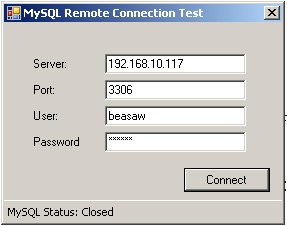
Connecting to Remote MySQL (Linux Server) using Visual C#

|
97__287x226_mysqlRemote1.jpg

I have a current project that connects to a remote database server using Visual C# as client window application. So before I started my project, I tested it if it is possible to connect and the result, it does connect. For those does who failed to solve this problem, here's my tutorial/guide.

Test Project Requirements:

   * VMware Workstation 5.5
   * CentOS 4.4
   * Visual C# Express Edition
   * MySQL Data Connector .Net v1.0.7

Scenario:

The client's OS is MS Windows XP and the server is CentOS Linux. The client will connect to the Linux server to query and process some transaction. But in the sample code, it demonstrate only how to connect remotely in the server. My server's IP address is 192.168.10.117 and a MySQL port of 3306 (default port).

Read more: C# Corner

Posted via email from jasper22's posterous

ReFrameworker v1.1 (Managed Code Rootkit)

|
A Managed Code Rootkit (MCR) is a special type of malicious code that is deployed inside an application level virtual machine such as those employed in managed code environment frameworks – Java, .NET, Dalvik, Python, etc.

Having the full control of the managed code VM allows the MCR to lie to the upper level application running on top of it, and manipulate the application behavior to perform tasks not indented originally by the software developer.

ReFrameworker is a general purpose Framework modifier, used to reconstruct framework Runtimes by creating modified versions from the original implementation that was provided by the framework vendor. ReFrameworker performs the required steps of runtime manipulation by tampering with the binaries containing the framework’s classes, in order to produce modified binaries that can replace the original ones.

It was developed to experiment with and demonstrate deployment of MCR (Managed Code Rootkits) code into a given framework.

Read more: AppSec

Posted via email from jasper22's posterous

OWASP Code Crawler v2.7 released

|
A tool aimed at assisting code review practitioners. It is a static code review tool which searches for key topics within .NET and J2EE/JAVA code. The aim of the tool is to accompany the OWASP Code review Guide and to implement a total code review solution for "everyone".

Version 2.7

- Removed unused References and Objects
- Reduced Noise (.NET Files)
- Replaced old scanning engine with new multi step engine (Only Stage 1 is active in this release for Single File Scan Only)
- New DarkMoon IDE Theme
- Single Scan Window : Mark a Threat as False positive (remove Highlighting, remove threat from ThreatCollection object)
- Bug Fixing

Read more: Codeplex

Posted via email from jasper22's posterous